This Lecture Tour was born from my desire to continue the work started by my father and the Civil Rights Generation, which must now be carried forward by us, their descendants.
The central image of the tour that you see on the home page is of the Edmund Pettus Bridge in Selma, Alabama. Though named for a Confederate General and leader of the Ku Klux Klan, the bridge is also a symbol of the courage of Dr. King and my dad and so many others, and of the power of peaceful civil disobedience in the face of state-sanctioned brutality.
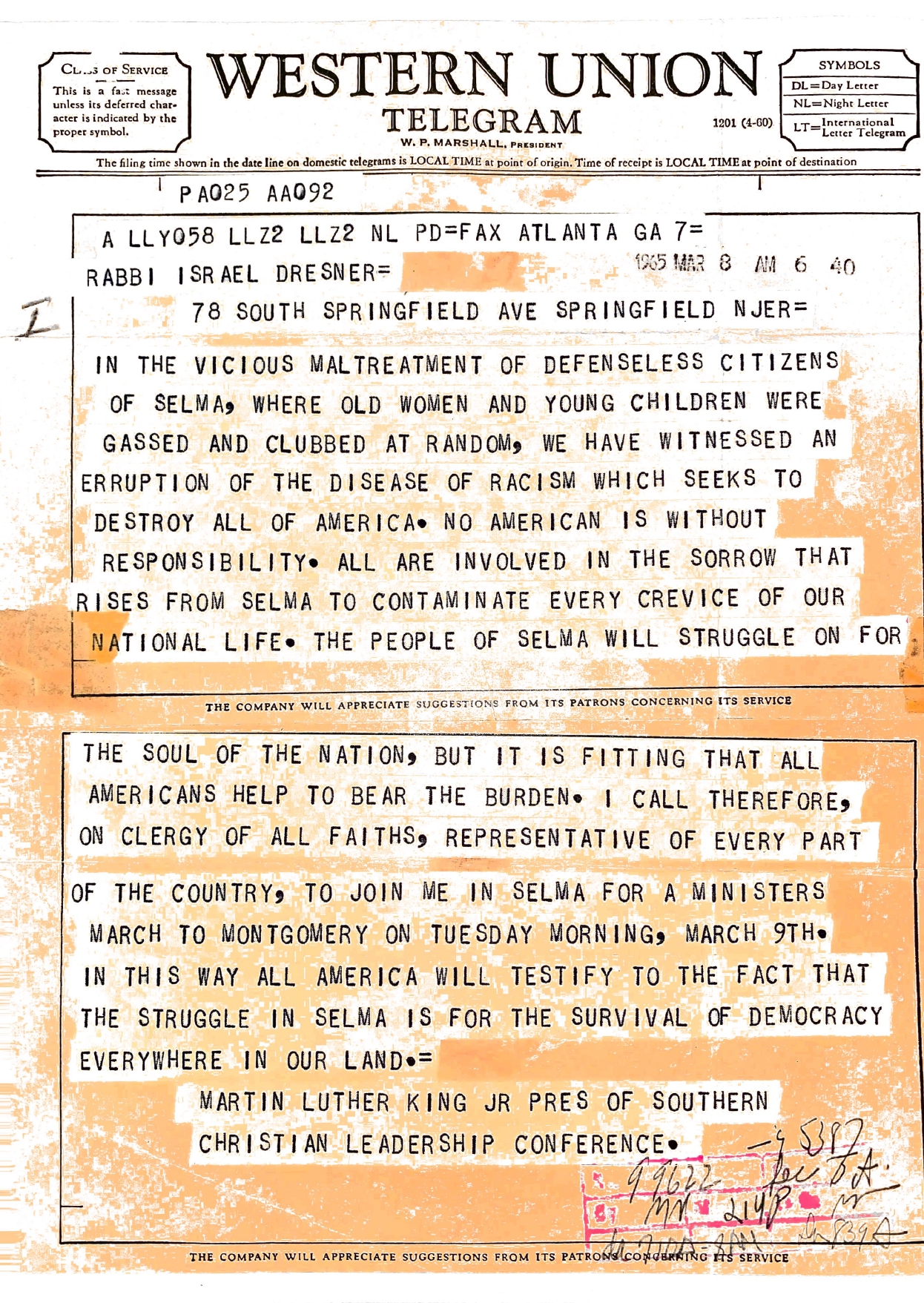
This is the bridge where Congressman John Lewis and scores of others were savagely beaten by state troopers and deputized Klansmen on “Bloody Sunday”, March 7th, 1965. Immediately afterwards, Dr. King put out a call for a Ministers’ March to take place two days later in the telegram to the right.
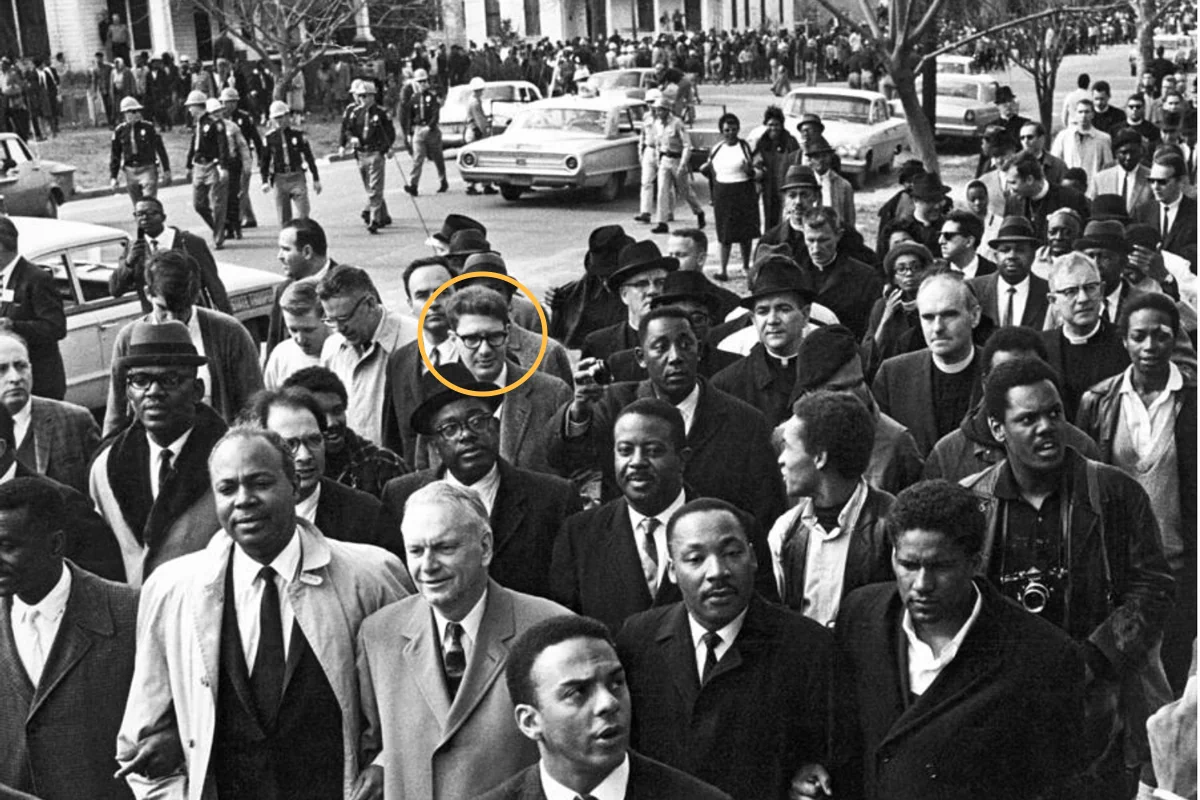
My dad not only answered King’s call but, of all the hundreds of clergymen who also came, my father was one of only two whom Dr. King chose to lead the prayer before the march. The photo to the right captures that moment.
My choice of the bridge as a metaphor was also Inspired by Dr. King’s iconic “I Have A Dream” speech in which he said “And with this faith, I will go out and carve a tunnel of hope through the mountain of despair.” Tunnels, however, aren’t visible. Bridges are. I am committed to building—and rebuilding—those bridges, and ask you to join me in this sacred endeavor.
This Lecture Tour was born from my desire to continue the work started by my father and the Civil Rights Generation, which must now be carried forward by us, their descendants.
The central image of the tour that you see on the home page is of the Edmund Pettus Bridge in Selma, Alabama. Though named for a Confederate General and leader of the Ku Klux Klan, the bridge is also a symbol of the courage of Dr. King and my dad and so many others, and of the power of peaceful civil disobedience in the face of state-sanctioned brutality.
This is the bridge where Congressman John Lewis and scores of others were savagely beaten by state troopers and deputized Klansmen on “Bloody Sunday”, March 7th, 1965. Immediately afterwards, Dr. King put out a call for a Ministers’ March to take place two days later in the telegram on this page.
My dad not only answered King’s call but, of all the hundreds of clergymen who also came, my father was one of only two whom Dr. King chose to lead the prayer before the march. The photo on this page captures that moment.
My choice of the bridge as a metaphor was also Inspired by Dr. King’s iconic “I Have A Dream” speech in which he said “And with this faith, I will go out and carve a tunnel of hope through the mountain of despair.” Tunnels, however, aren’t visible. Bridges are. I am committed to building—and rebuilding—those bridges, and ask you to join me in this sacred endeavor.
THIS IS MORE THAN A LECTURE TOUR; IT IS A CALL TO ACTION, A PLEA FOR UNITY, AND AN INVITATION TO JOIN US IN BRIDGING THE DIVIDE. TOGETHER, LET US MAKE THE BROTHERHOOD AND SISTERHOOD OF HUMANKIND A REALITY.
Avi Dresner is a journalist, documentary filmmaker and screenwriter. His work has appeared in numerous publications, including The New York Times, and he is a two-time winner of the Rockower Award (aka “the Jewlitzer”:) from the American Jewish Press Association.
He is Executive Producer of the documentary-in-progress, “The Rabbi & The Reverend” and co-screenwriter of the feature film script “King’s Rabbi”, both of which tell the story of his father, Rabbi Israel Dresner, the most arrested and jailed rabbi during the Civil Rights Movement and an ally and friend of the Reverend Dr. Martin Luther King, Jr.
Avi is also Executive Director of Black-Jewish Reconciliation: (Re)Building The Bridge. On this national lecture tour, he presents on the history of the Black-Jewish Alliance during the Civil Rights Movement – as told through his father’s friendship with the Rev. Dr. Martin Luther King, Jr. – and engages in meaningful dialogue with local African American leaders, academics, activists and lecture attendees on the relevance of that alliance today.
Testimonials
We were honored to have Avi Dresner share his father’s story and legacy with us at our MLK Shabbat service. Avi’s heartfelt account of his father’s friendship and partnership with Dr. King is inspiring, and Avi’s own passion for Tikkun Olam (repairing the world) is contagious. Avi’s message is both timely and timeless.
In the 20+ years I have known Avi, I have seen him address our community countless times. With his knowledge, humor and passion for social justice, he not only knows how to move an audience, but he also moves them to action. I know he’ll do the same for your community.
I worked with Avi to help present a panel discussion focused on Black/Jewish partnerships through a historical lens. Avi’s contribution, both as a speaker and a thought leader, was instrumental in making this program a huge success. He has a passionate and deep understanding of this history, and proved to be a wonderful collaborator. I highly recommend his skills, experience, and thoughtful participation in any public program.
As the head of an organization devoted to eradicating racism in our community and beyond, I co-presented with Avi when he came to Jacksonville. Our discussion acknowledged the complexities of the relationship between our communities and challenged romanticized versions of perfect allyship. We were able to be honest in our assessment of the often lonely road that leaders of movements travel, even experiencing hatred from communities we try to help! Partnering with Avi offered a place for me and others to heal both personally and professionally as we are pushing the boundaries on what is just, fair, and equitable. He is living up to his father's legendary boldness--he is, indeed, a true partner and ally in the fight for justice.
I’m inspired by the work to bridge communities and build a common narrative to not only honor the past, but also light the path forward, emphasizing how solidarity is more crucial than ever.
Join Us in Advancing Black-Jewish Reconciliation + Civil Rights 2.0.
SUBSCRIBE TO OUR NEWSLETTER
By submitting this form, you are consenting to receive marketing emails from Black-Jewish Reconciliation. You can revoke your consent to receive emails at any time by using the Safe Unsubscribe® link, found at the bottom of every email. Emails are serviced by Constant Contact.